
In this lesson, you’ll get an overview of types of contracts.
Types of Contracts
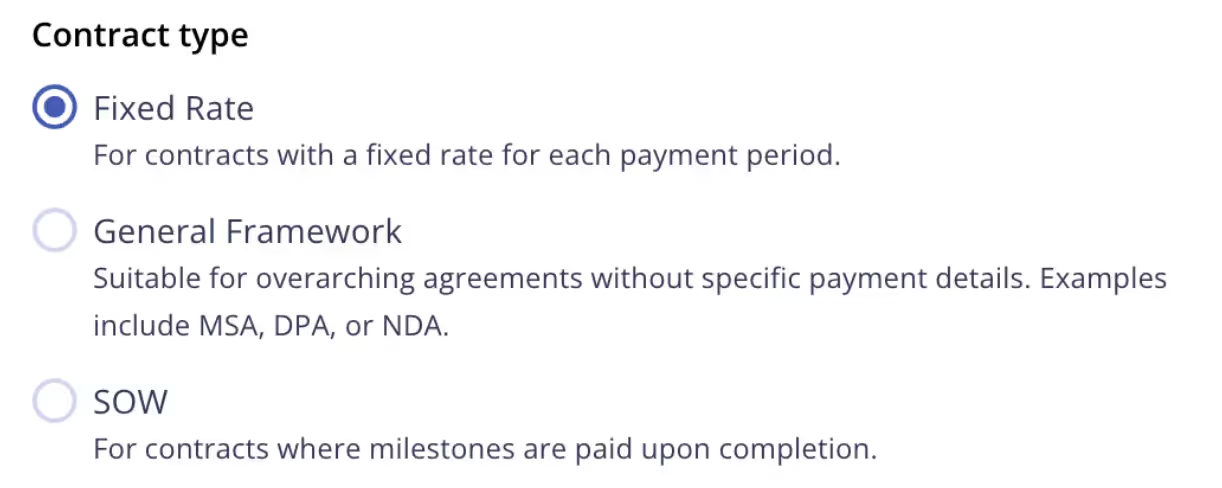
Currently, three types of contracts are available: Fixed Rate, General Framework, and SOW. Each type is designed to handle different use cases, which we will discuss in later module sessions.
When to Use Fixed Rate Contracts
The Fixed Rate Contract Type is ideal for managing long-term projects where vendors receive fixed payments on a regular schedule, such as weekly or monthly.
This contract type offers special features such as automated invoice scheduling and payroll calculations.
Examples of scenarios include:
- Employing a full-time freelancer as a dedicated worker
- Hiring a freelancer for specific tasks or functions at a fixed monthly rate
When to Use General Framework Contracts
The General Framework Contract is not directly tied to a specific project or payment relationship, making it suitable for the Master Services Agreement (MSA) and Non-Disclosure Agreement (NDA).
This type of Contract can be launched directly from the onboarding workflow, effectively
replacing the need to use the Agreements stage for this type of contract (MSA/NDA).
Other types of agreements that are suitable for General Framework Contracts include:
- Independent Contractor Agreement (ICA)
- DPA
- Services Agreement
When to Use SOW Contracts
The SOW Contract includes unique features such as built-in task(s) creation, budget tracking, reimbursement budget tracking, and invoice automation.
The SOW contract is a central wrapper for all related tasks, timesheets, invoices, agreements, and communications in this model.
We utilize tasks as contract milestones. A Statement of Work (SOW) can have one or multiple such milestones (tasks).
Projects are not affected, as contracts can have deliverables across various projects.
Next lesson
Use Cases: Contracts
View →