Setting up freelancers for success shouldn't burn out your team or drain your time.
If you're onboarding independent contractors at scale, manually chasing NDAs, tax forms, or access credentials just isn't sustainable. Every back-and-forth email delays productivity and puts unnecessary pressure on your operations team. That's why more companies are turning to freelancer management software with automated onboarding workflows.
In this post, I'll walk you through five ways to automate onboarding based on real use cases from teams who went from overwhelmed to efficient. These aren't abstract ideas. They're practical steps you can implement today to make onboarding faster, more compliant, and much more human.
What's an Automated Onboarding Workflow?
At its core, a workflow is just a smart sequence of steps — built to happen automatically. In Worksuite, that means collecting documents, triggering tasks, and guiding each freelancer through exactly what they need to see, sign, or submit.
You decide the stages. We handle the sequence. And your team gets its time back.
Need a contract signed? Done. Want to share editorial guidelines or a welcome video? Easy. Need to validate a tax form, ID, or bank detail? That too.
For one customer, Fragment Media, publisher of The Daily Dot, automated workflows saved five hours a week. That's five hours they now spend on growth and strategy, not nudging freelancers for forms.
Why Automate Freelancer Onboarding?
Here's what happens without automation:
- Your ops team becomes a ticket queue
- Managers chase tax forms and access approvals
- Documents get lost in email threads
- Freelancers wait days to start
Multiply this by 100 freelancers or 1,000 and the cracks become canyons.
With automation, onboarding runs quietly in the background. Freelancers get a consistent experience. Your team stays focused. And everyone wins.
For global operations, where compliance is critical, this isn't a nice-to-have. It's table stakes.
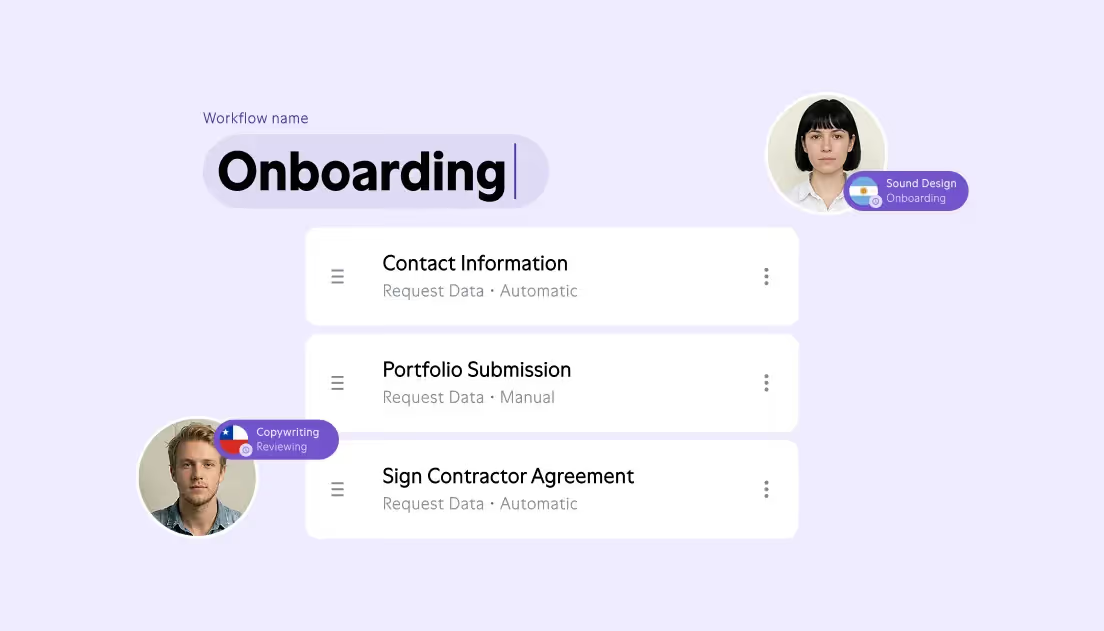
1. Guide Freelancers Through Tailored Paths
Different freelancers need different onboarding experiences.
1099? W-2? International contractor? You can configure custom workflows for each one, complete with branding, conditional logic, and role-specific tasks.
One Worksuite customer, Jack Morton Worldwide, uses our independent contractor management platform to route freelancers and employees through separate onboarding journeys while keeping everything centralized.
2. Add a Personal Touch at Scale
Automation doesn't have to feel robotic.
You can customize every step of a workflow — from microcopy to welcome videos. Several of our clients kick things off with a short video from a team lead or founder, making freelancers feel like they're part of something real.
You only record it once. But every new hire sees it every time.
3. Educate and Empower Early
A good onboarding workflow doesn't just collect documents. It shares the resources freelancers need to hit the ground running.
For example, Hugo Mentors shares a coach onboarding playbook (saving 30 emails a day), digital publishers share editorial guidelines, and creative agencies share brand assets before kickoff. And they all do it hands-free — as just one automated step in their onboarding flow.
4. Get Agreements Signed Without Email Ping-Pong
Contracts are critical. So are NDAs, SOWs, IP clauses, and payment terms.
Worksuite integrates directly with HelloSign (Dropbox Sign), so you can assign templates, set fillable fields, and route documents for signature without lifting a finger.
One customer, Vested, uses this to onboard financial partners securely, automatically, and at scale — with no bottlenecks, no missed steps.
5. Automate Background and Reference Checks
If you run high-trust operations — like home services or finance — you likely need verification workflows.
Ferguson, for example, runs automated background checks on thousands of contractors across all 50 states using Worksuite + third-party integrations. Compliance is built in. And admin effort is nearly zero.
If you're hiring fast and globally, this kind of automation isn't just efficient. It's protective.
Related reading: Contractor or Employee? The Risks of Misclassification
What Happens After a Workflow Stage?
Here's where automation meets control. You can configure every workflow to pause for manual review, notify managers, or trigger next steps like provisioning tools or assigning tasks.
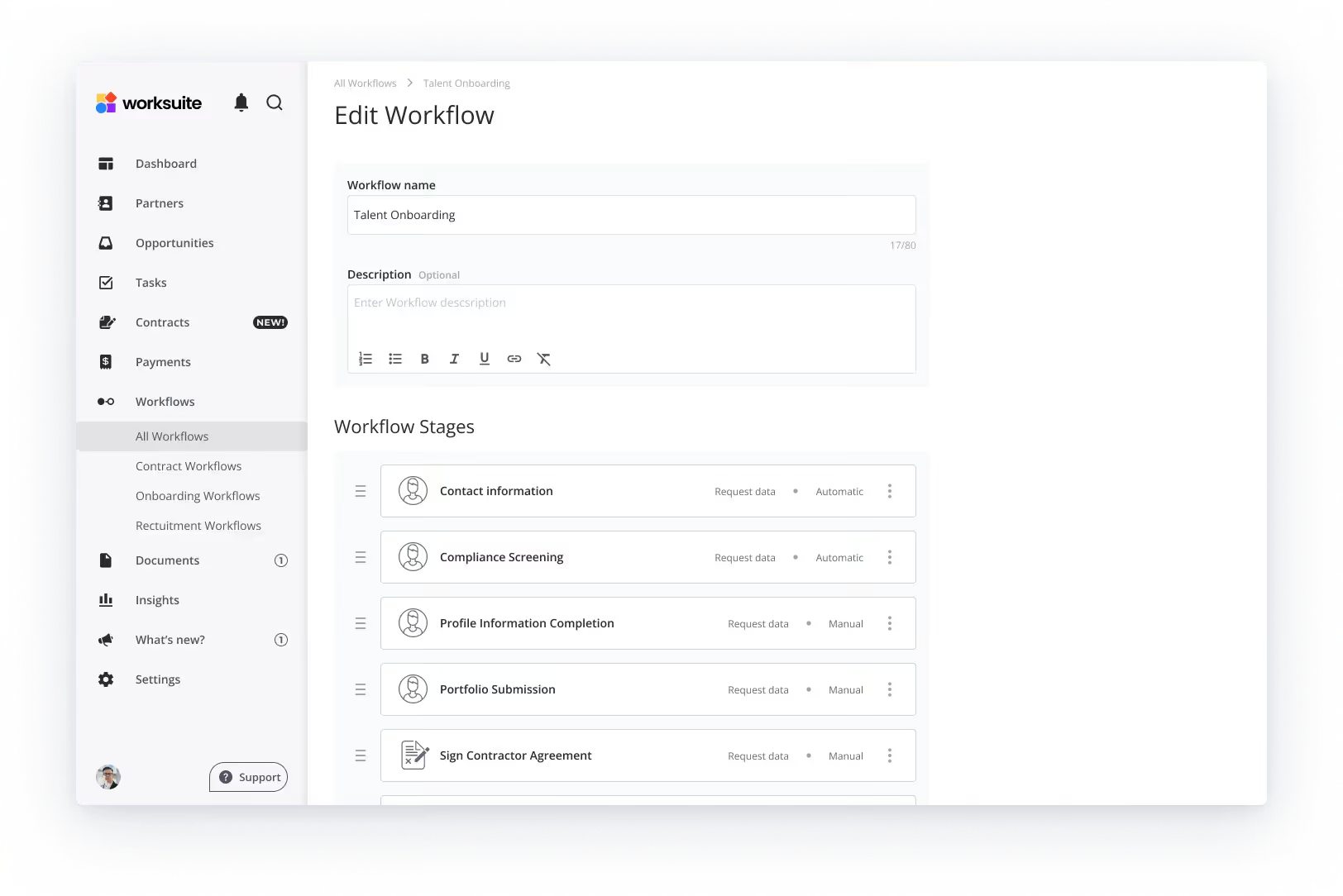
In other words, your process runs while you sleep — but only moves forward when you say it should.
Final Thought: Simplify, Don't Sacrifice
Good onboarding builds trust.
It tells freelancers you're organized, respectful of their time, and serious about collaboration. Automation doesn't remove the human element — it supports it.
The best systems make sure every freelancer is onboarded consistently, compliant from day one, and set up for success without email chaos.
That's what we've built in Worksuite. It's not just a tool, but a repeatable system to onboard freelancers the right way.
Ready to simplify freelancer onboarding, without losing the personal touch?